
Author: Editor
-

Bangladeshi Villagers Despair at Loss of President
William Branigin, Washington Post (June 3, 1981) Iman Ali Sarder paused by the side of the road outside this village northeast of Dacca, holding up an old black umbrella with a carved, wooden handle to shade himself from the blazing sun. The 67-year-old farmer listened stoically to a visitor’s question, but as he answered a…
-
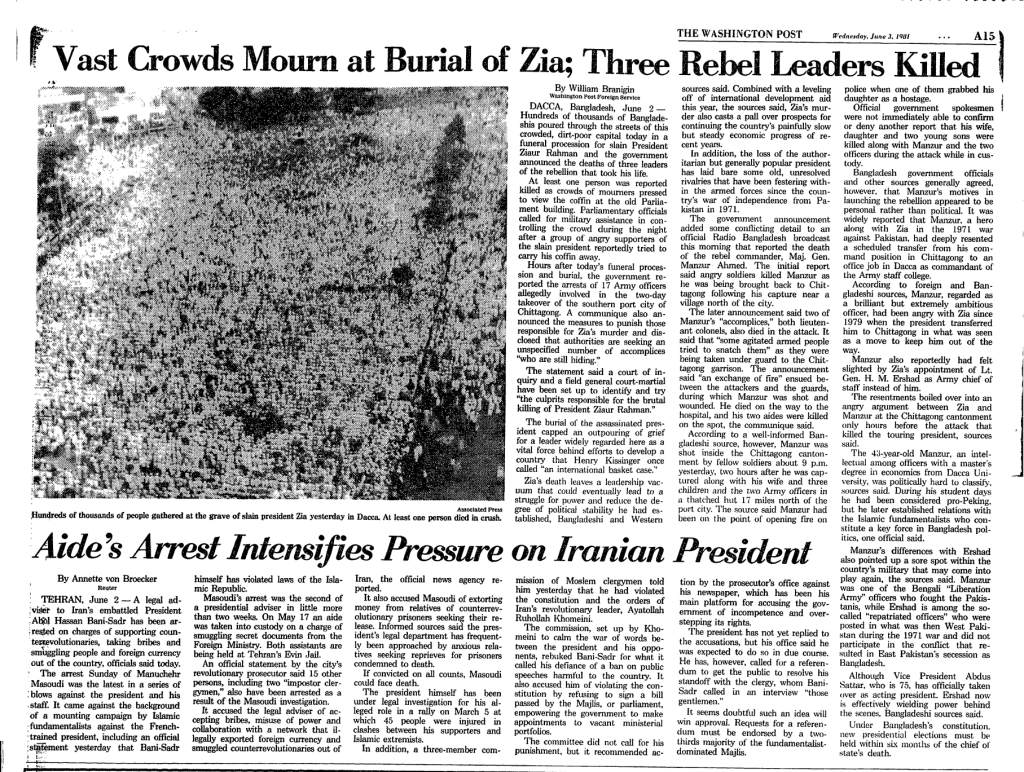
Vast Crowds Mourn at Burial of Zia
William Branigin, Washington Post (June 3, 1981) Hundreds of thousands of Bangladeshis poured through the streets of this crowded, dirt-poor capital today in a funeral procession for slain President Ziaur Rahman and the government announced the deaths of three leaders of the rebellion that took his life. At least one person was reported killed as…
-

President Carter’s letter to Zia on his firm diplomacy
Bangladesh was at the forefront of the diplomatic efforts to tackle the hostage crisis in Iran and the Soviet invasion of Afghanistan. Ziaur Rahman personally wrote a letter to President Bani Sadr of Iran after the Islamic Revolution regarding the hostage crisis and Bangladesh decided to boycott the Moscow Olympics to protest Soviet invasion in…
-

Zia’s letter to President Carter on Ganges water sharing
On November 30, the General Assembly elected Bangladesh to a 2-year term on the Security Council through secret ballot voting. The U.S. state department decided to support Japan, yet Bangladesh managed to pull it off as Japan withdrew its candidacy after two rounds of voting. Ziaur Rahman in his letter to President Carter informed the…
-

President Zia’s exchange of letters with Carter on UN Security Council
Bangladesh was a successful candidate for the United Nations Security Council’s membership in 1978. But before the election for membership, Bangladesh needed the support of the majority of the nations including the permanent member United States. President Zia on June 26, 1978, wrote a letter to President Jimmy Carter of the U.S. for his support…
-

Joint Statement: Meeting with President Ziaur of Bangladesh
President Carter and President Ziaur Rahman of Bangladesh met for one hour today. The two Presidents held a wide-ranging discussion on bilateral and international matters. Others participating in the talks included Foreign Minister Shamsul Huq, Agriculture Minister Nurul Islam, Information Consultant Daud Khan Majlis, Ambassador Tabarak Husain and Additional Foreign Secretary Ataul Karim for Bangladesh…
-
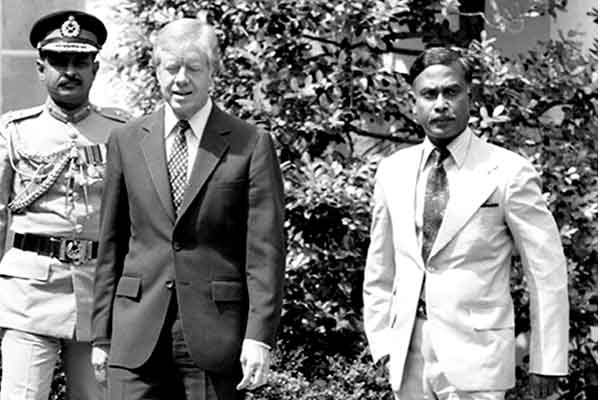
Remarks of the Presidents: Meeting between Carter & Zia
President Ziaur Rahman is the first Bangladeshi President to be invited to the White House of the United States as a president’s guest. He went to visit President Jimmy Carter, the 39th President of the United States at the Oval Office on August 27, 1980. After their 20-minute-long meeting, they met key officials in the…
-

Zia’s exchange of letters with President Carter on food assistance
Bangladesh suffered from a famine in 1974 and due to the growing population problem, despite some immediate steps taken by the Zia administration, was struggling to harvest sufficient food for a country with a population of nine million. To avert another famine, Ziaur Rahman personally encouraged leaders of the developed world to provide food assistance…
-

UK Foreign Office’s confidential letter on Zia
President Ziaur Rahman paid an official visit to the United Kingdom in June 1980 that made headlines in The Times and The Guardian. A letter was sent to the Prime Minister’s office when he expressed his willingness to visit the United Kingdom and have a discussion with Prime Minister Margaret Hilda Thatcher from the Foreign…
-
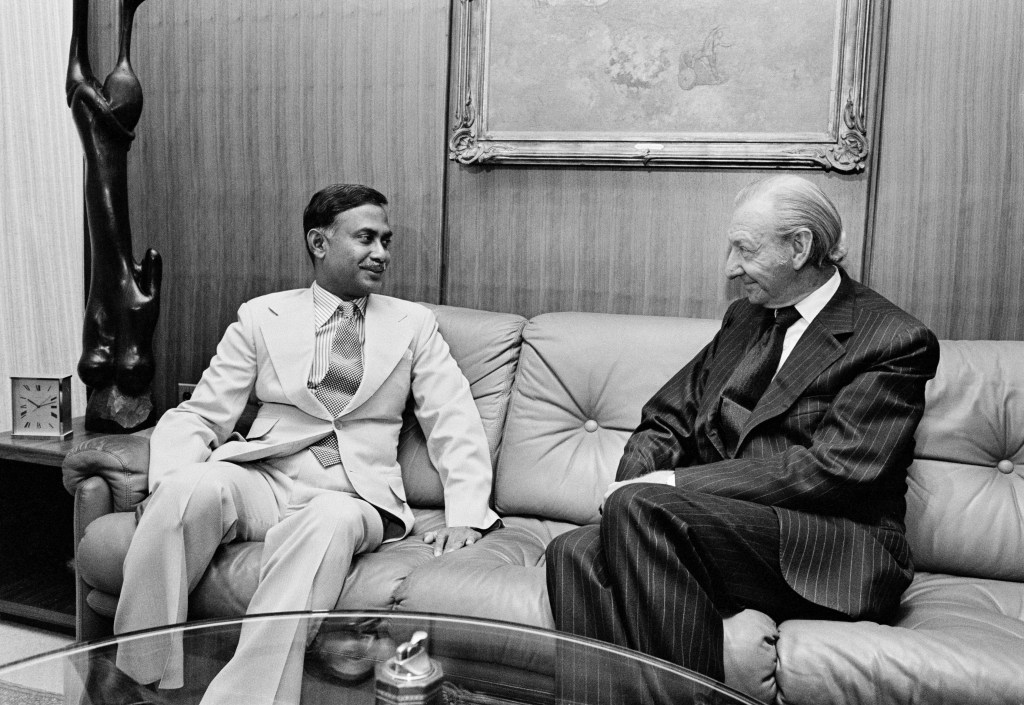
UN Secretary General on Zia’s death
U.N. Secretary-General Kurt Waldheim sent a message to Acting President Abdus Sattar on May 30, 1981, over an urgent cable through United Nations Information Center, Dhaka. The message reads: Mr. President, I wish to express to you and through you to the Government and people of Bangladesh my horror and grief at the tragedy which…
 Zia Archive